BOOST 2025: 17th International Workshop on Boosted Object Phenomenology at Brown
8/1/2025
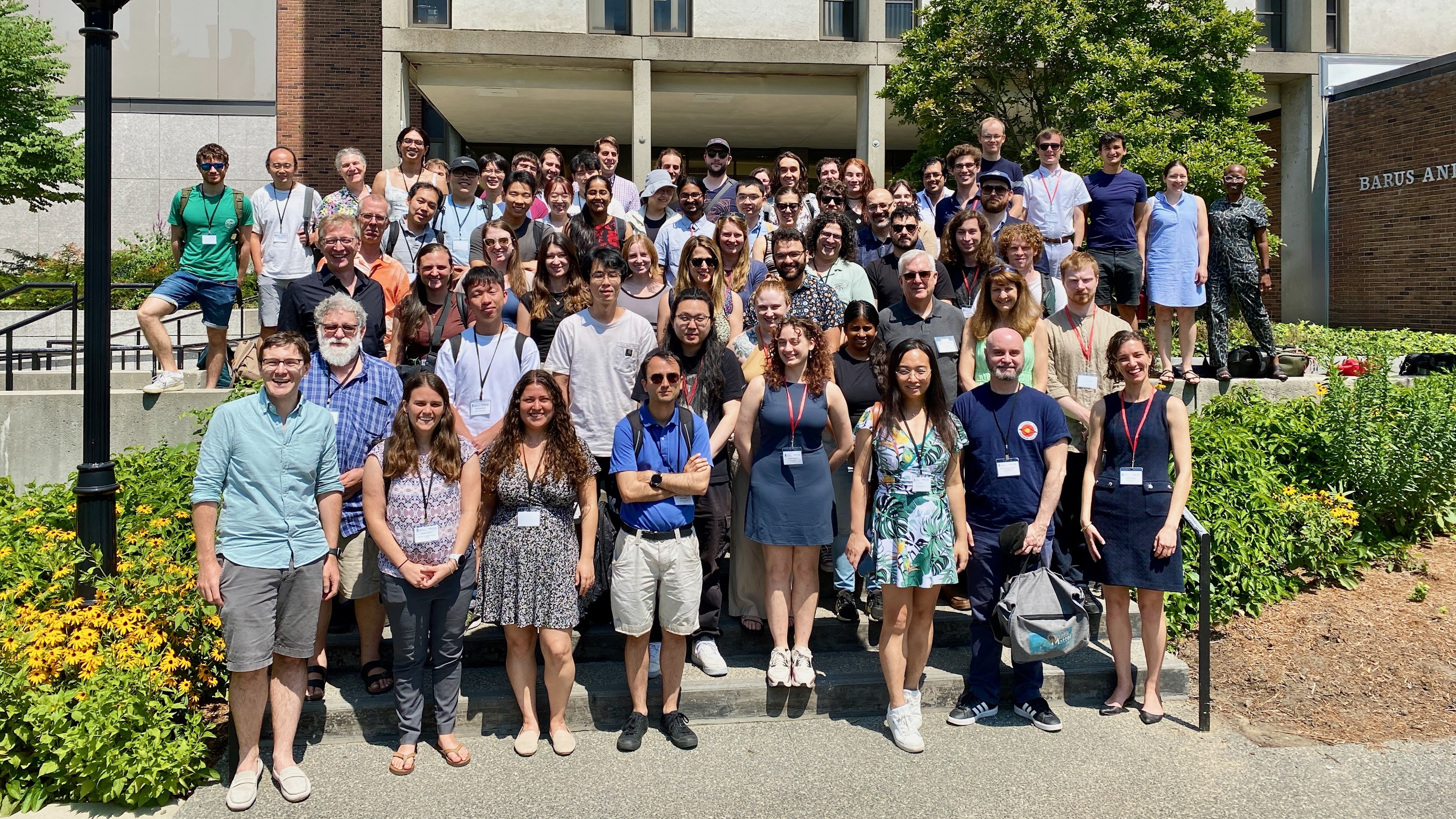
Brown's Department of Physics hosted the 17th annual BOOST conference in July 2025, bringing together 100+ researchers to discuss advances in boosted object phenomenology, jet substructure, and AI/ML applications in collider physics.
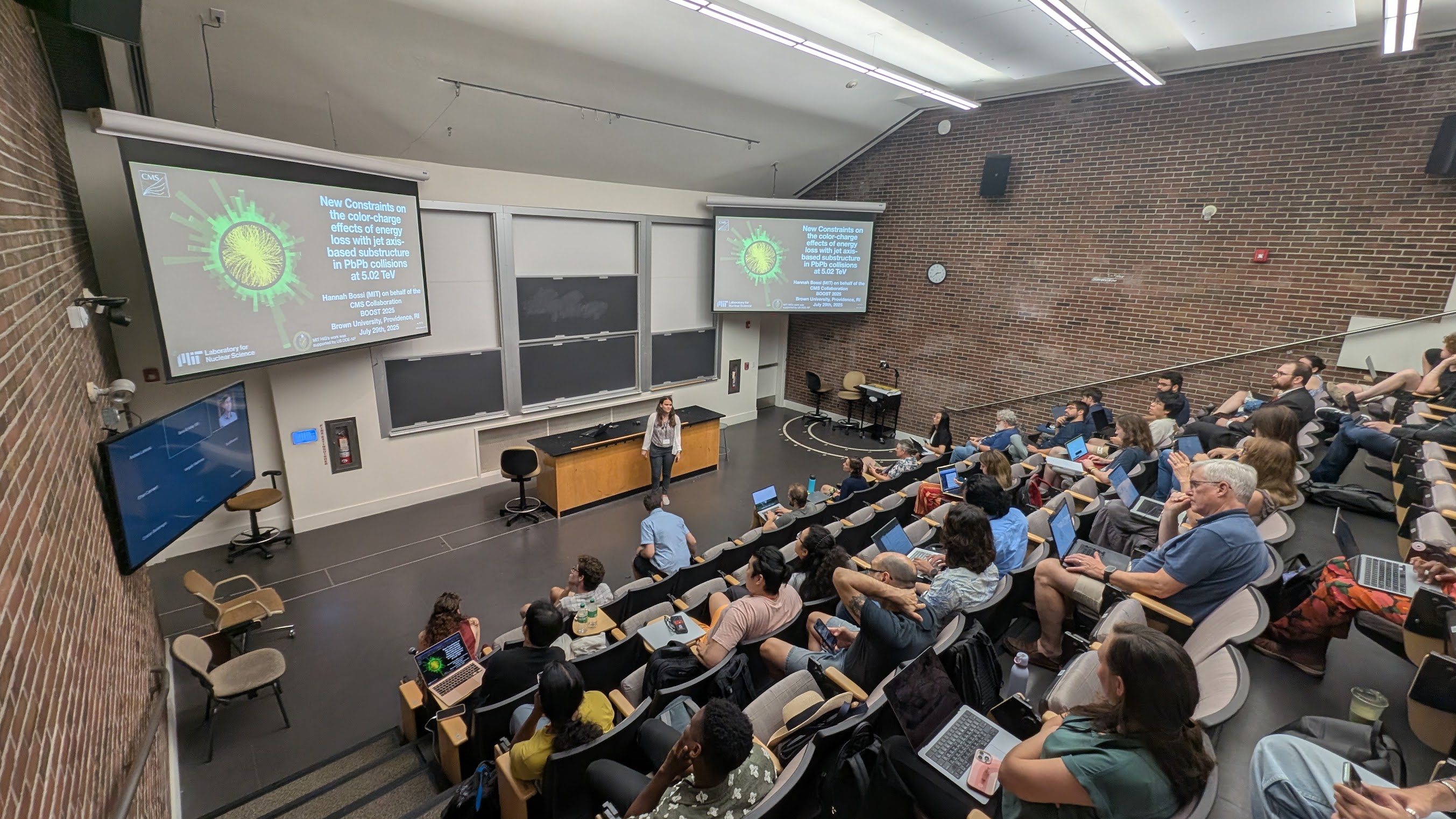
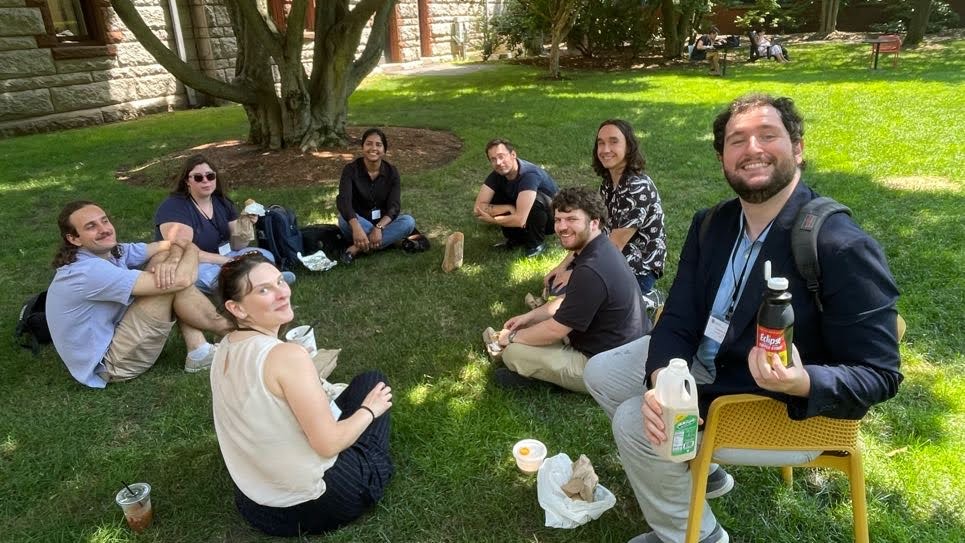
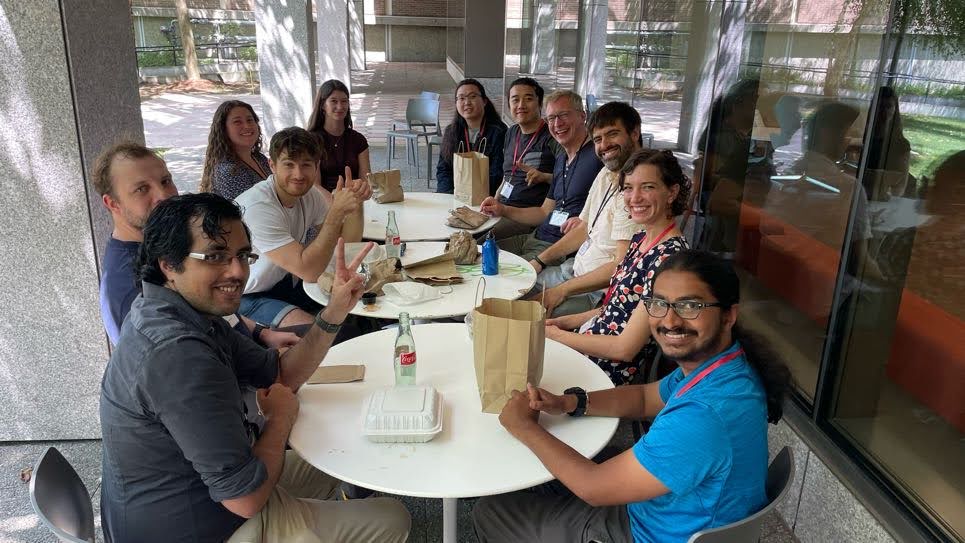
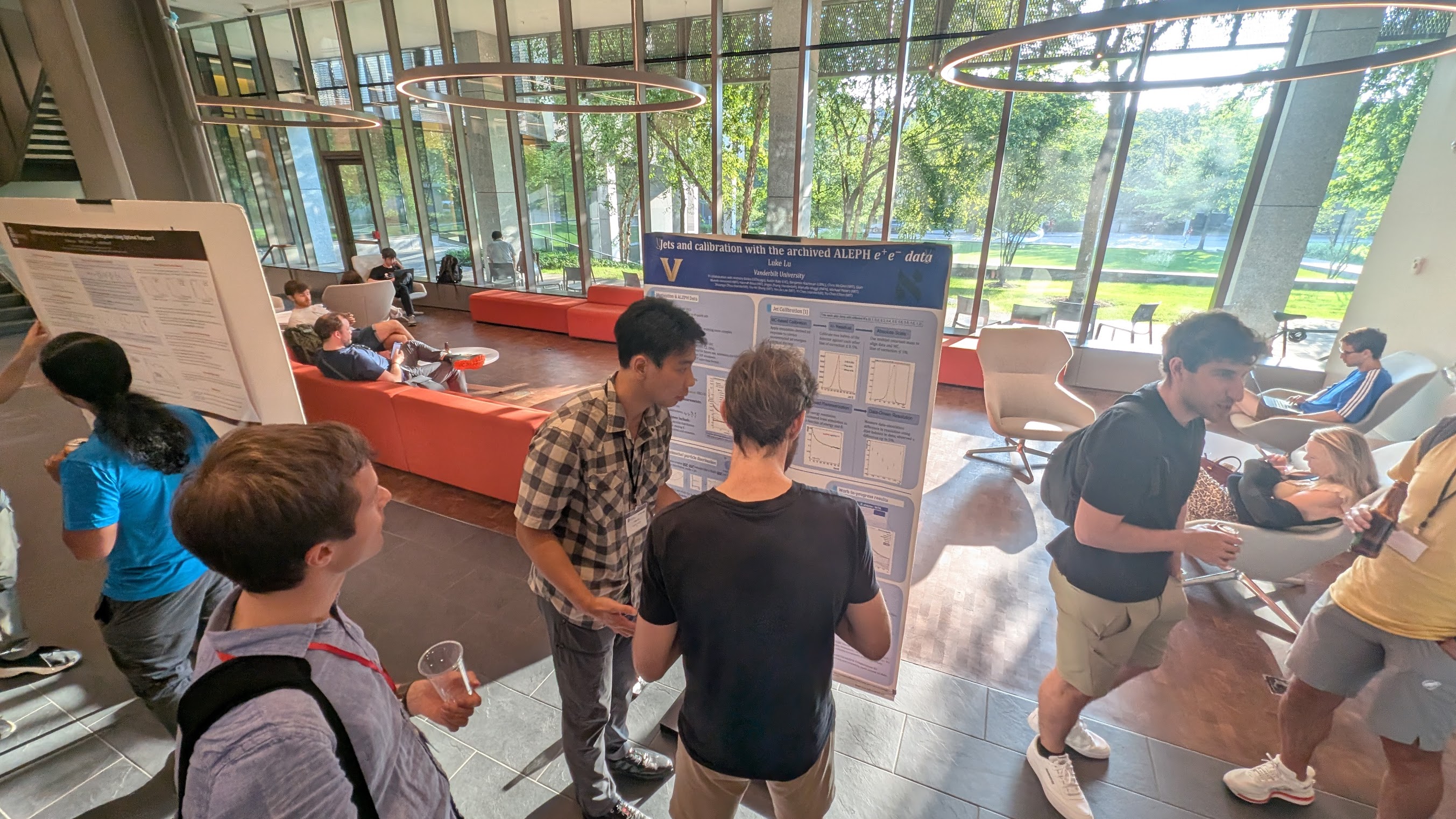
In July 2025, Brown welcomed a global community of over 100 researchers from more than 40 research institutes across North America, Europe and Asia to Providence to discuss the latest advances in high-energy physics. This conference is a prominent joint meeting of experimental and theoretical physicists studying “boosted objects” – massive particles produced at high energies in LHC collisions, that decay into collimated sprays of particles known as “jets.” By analyzing the radiation patterns within jets, researchers can identify the original particle and gain insights about the fundamental forces governing our universe. This technique has become a cornerstone of high-energy physics studies at the LHC that address fundamental questions in physics, such as, ‘what is the nature of dark matter?,’ or ‘why is there more matter than antimatter?’
The BOOST conference series has played a pivotal role in recent developments and applications of quantum chromodynamics (QCD), the theory of the strong interaction. The development of jet substructure techniques has transformed the LHC program of searches for new particles. Boosted object phenomenology had not been conceived of when the general-purpose LHC detectors, ATLAS and CMS, were designed: it is now one of the most recognizable techniques used at the LHC. The BOOST community has been at the forefront of the development and deployment of advanced Artificial Intelligence and Machine Learning (AI/ML) algorithms for particle physics. Members of the BOOST community have been positioned as leaders in applying these methods to challenges in other scientific fields, including astrophysics and quantum computing.
BOOST is a strongly collaborative meeting that brings together theorists and experimentalists from major collider experiments like the Large Hadron Collider (LHC) at CERN and the Relativistic Heavy Ion Collider (RHIC) at Brookhaven National Laboratory in the US. The conference has catalyzed crucial exchanges that led to the first QCD predictions for jet substructure at hadron colliders. These predictions, enabled by the ‘soft-drop’ algorithm, were tested against experimental data by the ATLAS and CMS Collaborations. This ongoing dialogue continues to drive improvements to the next generation of theoretical ‘Monte Carlo’ models, which aim to improve the precision and discovery potential of scientific results from colliders during the era of the high-luminosity LHC.
You can access the full program and list of speakers on the BOOST 2025 indico page.